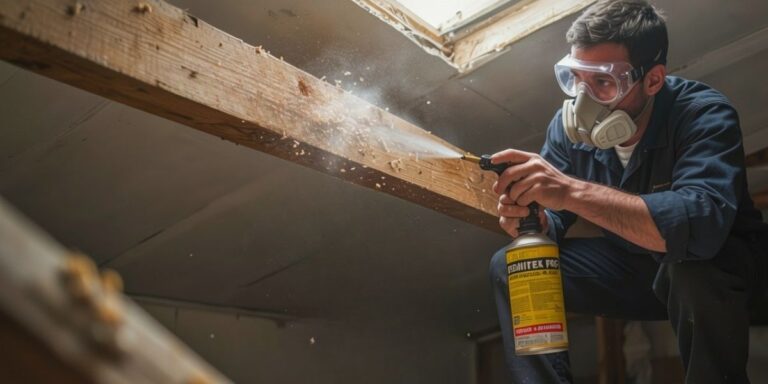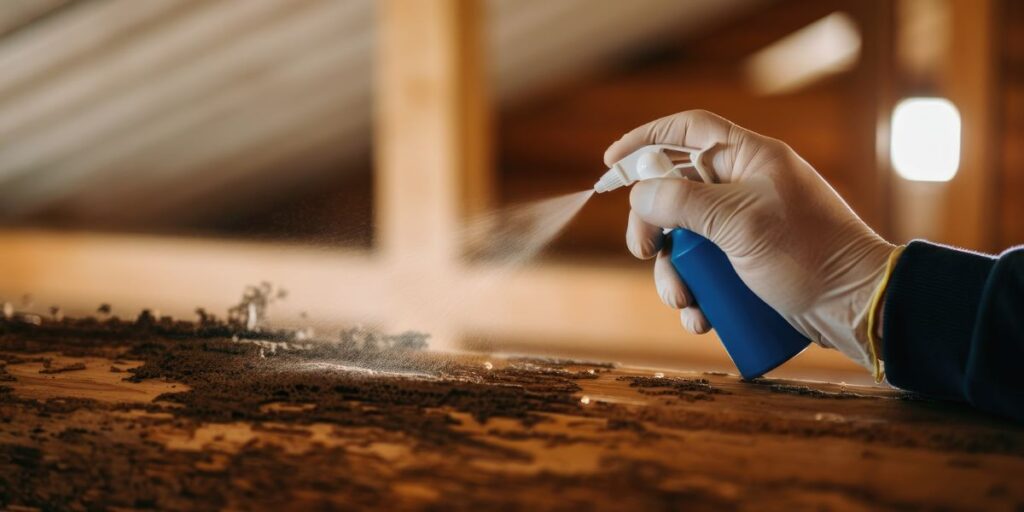
The common signs of termite damage in a Dubai villa are mud tubes on walls and foundations, timber that sounds hollow when tapped, blistered paint with no leak nearby, discarded wings on window sills, and doors or windows that start to stick. Two or more together usually mean active termites.
Termites do not announce themselves. By the time a door frame sounds hollow or a mud tube appears on a garden wall, the colony has been feeding for months in the soil under your villa. You cannot wait for the problem to become obvious, because obvious means expensive. The good news is that termites leave a short list of clues, most of them visible with a torch and ten minutes.
Why are villas the main target?
Most termite damage in Dubai comes from subterranean termites, which nest in the soil and travel up into the building. A villa gives them everything an apartment cannot.
There is soil on every side. Gardens, planters, boundary walls and landscaped edges sit directly against the structure, and daily irrigation keeps that soil moist all year.
There is timber at ground level. Door frames, skirting, built-in wardrobes and pergolas are all cellulose, and all within reach of the soil.
New villas are not exempt. Construction leaves buried timber offcuts and disturbed soil, which is why even a villa that is only a few years old can need treatment. Our pre-occupancy checklist for a new villa handover covers what to look at before you move in.
What are the signs of termite damage?
Work outside first, then inside. Take a torch and a screwdriver, and tap as you go.
| Sign | Where to look in a villa | What it means |
|---|---|---|
| Mud tubes | Boundary walls, foundation edges, garage walls, inside store rooms | The clearest sign: an active route from soil to timber |
| Hollow sound when tapped | Door frames, skirting, wardrobe bases, window sills | The timber is being eaten from the inside out |
| Blistered or peeling paint | Skirting and lower wall sections, with no leak nearby | Moisture from termite activity behind the surface |
| Discarded wings | Window sills, door thresholds, near outdoor lights | A swarm has been through, often after rain |
| Doors or windows that stick | Ground floor rooms, especially after humid weather | Swelling and distortion in the frame |
| Crumbling or papery timber | Skirting, door frames, wardrobe bases, garden structures | Workings inside the wood, often packed with soil |
| Soft or sagging floors | Parquet, timber thresholds, under heavy furniture | Damage has reached structural or subfloor timber |
One sign on its own is worth checking. Two or more in the same area usually means an active colony, and that is the point to book a professional termite inspection rather than carry on looking.
Frequently Asked Questions
How do I know it is termites and not water damage?
Water damage usually has a source you can trace, and the staining spreads outwards from it. Termite blistering appears with no leak nearby, often low on the wall, and the timber behind it sounds hollow when tapped.
When do termites swarm in Dubai?
Swarms commonly follow rain and humid spells, when winged termites leave an established colony to start new ones. Finding discarded wings on a windowsill means a colony is nearby, not necessarily inside your villa.
I found a mud tube. Should I spray it?
No. Breaking or spraying a mud tube can push the termites to build new routes elsewhere, and it removes the evidence a technician needs. Photograph it, leave it alone and book an inspection.
Can a new villa really have termites?
Yes. Fresh soil, buried construction timber and new landscaping are ideal conditions, and cases can be found in villas only a few years old. A check at handover is far cheaper than a repair later.
How often should a villa be inspected?
An annual check is sensible for a villa with a garden, and sooner if you see any of the signs above or if neighbouring plots are being treated. Keep the reports, because a record of inspections helps when you sell or re-let.
What should you do if you find signs?
Do not disturb the evidence. Leave mud tubes, damaged timber and live insects where they are, because the pattern shows the technician where the colony is working.
Photograph what you found and note the location, the date and whether the area is damp. If you have seen winged termites, keep a few wings in a sealed bag.
Then book an inspection. A Jezben technician identifies mud tubes and affected areas, checks wooden door frames and the external perimeter, and explains what is active and what is old damage.
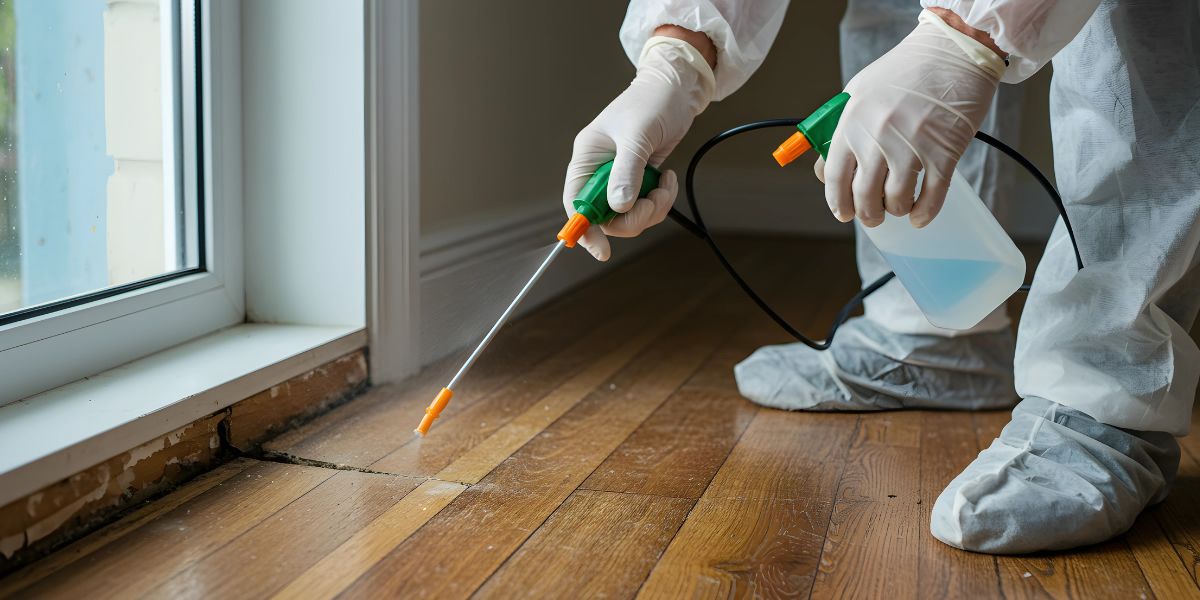
If treatment is needed, post-construction work may include drilling of designated treatment points and chemical injection, soil treatment where accessible, localised treatment of affected wooden areas, sealing of the drilled points, and a follow-up inspection. Our guide to termite control methods in Dubai explains how each one is chosen.
How can you reduce the risk?
Termite treatment lasts longer when the conditions around the villa are not working against it.
- Keep timber off the soil. Store spare wood and pallets on a hard surface, and avoid pergola posts set directly into the ground.
- Move irrigation away from the walls and fix leaks quickly, because damp soil against the structure is the biggest invitation.
- Clear buried construction waste from the garden, and keep soil and mulch below the damp-proof line rather than piled against the wall.
- Check the perimeter twice a year, including the garage, store room and maid’s room, which people rarely inspect.
How soon should you have the villa checked?
Termites work slowly and quietly, and most costly cases begin as one mud tube that nobody looked at twice. Ten minutes with a torch, twice a year, gives most villas the early warning they need.
If you have found any of the signs above, book a termite inspection with Jezben. We check the villa inside and out, identify what is active and explain which treatment the villa needs before any work starts. Send a photo of what you found to +971 50 710 7126 on WhatsApp, or call the same number, and we will arrange a free initial inspection.