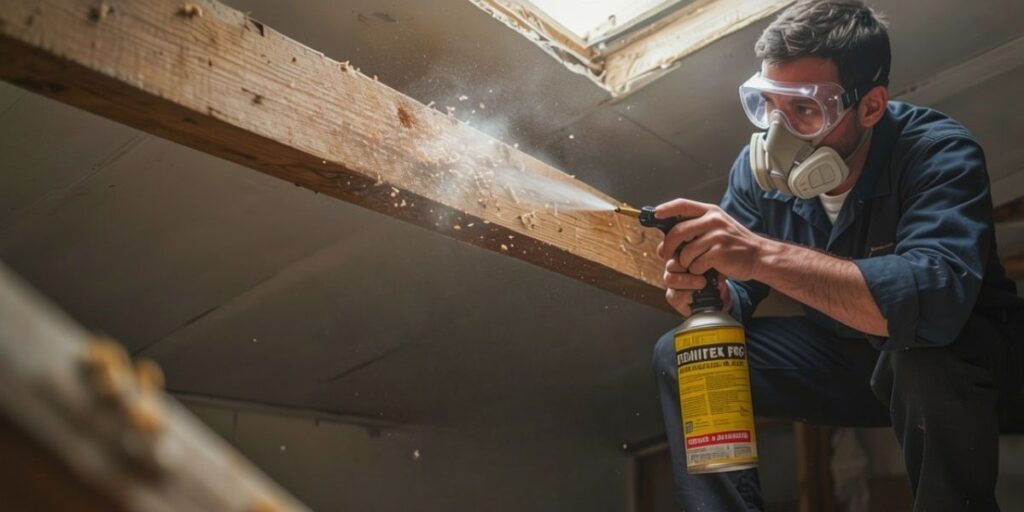
Effective Termite Control Methods for Dubai Homes
Mud tubes on a wall, a door frame that sounds hollow, a pile of tiny wings on the windowsill. By the time you see any of these, the colony has been working for months. Search for help, and you will find a long list of termite control methods, from soil barriers to baiting systems to tenting the whole building, and most of them sound equally convincing. They are not. In Dubai, the right method is decided by one thing: where the termites are living. Almost all termite damage here comes from subterranean species that nest in the soil and travel up into the building. This guide explains the termite control methods that actually work in Dubai properties, which one suits your home, and what to expect from a professional visit.
Why the Soil Decides the Method
Subterranean termites do not live in your furniture. They live underground, then travel to the wood through mud tubes, cracks in the slab and gaps where pipes pass through the floor.
That single fact rules out a lot of advice you will read online. Spraying a skirting board kills the termites you can see and leaves the nest untouched, which is why the damage carries on behind the paint.
Dubai also makes the problem worse. Warm sandy soil, irrigation in gardens and constant construction give colonies both moisture and new ground to spread through. Villas with gardens, ground floor units and buildings with timber door frames are the most exposed.
So any termite control method in Dubai that is going to work has to reach the soil and the structure, not just the surface. That is the test to apply when you compare quotes.
The Methods That Work
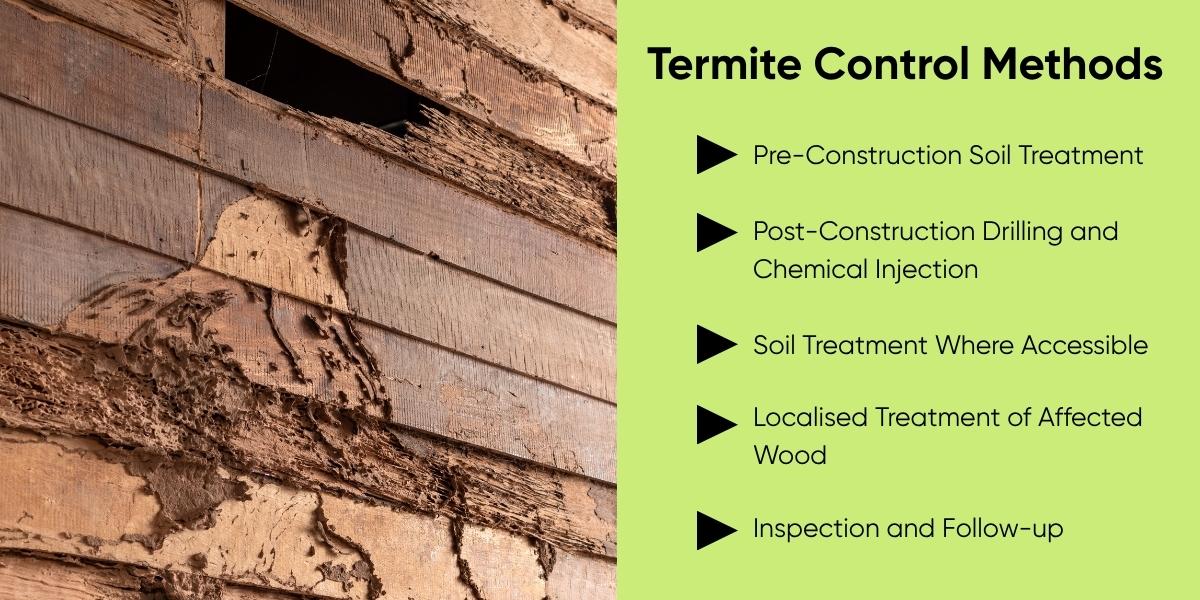
Pre-Construction Soil Treatment
A chemical barrier is applied to the soil before and during construction, under the foundation and slab, around foundation walls and at utility entry points. This is the cheapest protection you will ever buy for a new build.
Post-Construction Drilling and Chemical Injection
For a finished villa, treatment points are drilled at set positions, and termiticide is injected to reach the soil below. The drilled points are then sealed.
Soil Treatment Where Accessible
Around the external perimeter, planters and service trenches, the soil itself is treated so foraging termites meet the barrier before the building.
Localised Treatment of Affected Wood
Door frames, skirting and other affected timber are treated directly, as a support to the soil work rather than instead of it.
Inspection and Follow-up
Every method starts with an inspection for mud tubes and activity, and ends with a follow-up visit, because termite work is judged weeks later, not on the day.
How to Choose the Right Method for Your Property
If the building is still going up, choose pre-construction treatment. It is applied while the soil is open, costs the least and protects the whole footprint.
If you own a completed villa with a garden, expect drilling and injection at set points, plus treatment of the external perimeter and any affected timber. This is the standard termite control service Dubai villas need.
If you live in an apartment, the work is usually localised. Treatment focuses on the affected door frames, skirting or built-in units, and on the entry points on your floor. If you are buying or renting, ask for an inspection first with Jezben Pest Control L.L.C. A termite report before you sign is far cheaper than a repair bill afterwards.
Mistakes That Let Termites Come Back
- Treating the wood and ignoring the soil. The colony is underground, so surface work alone buys a few weeks.
- Letting timber touch soil. Pergolas, fence posts, garden furniture and stored offcuts give termites a bridge straight to the villa.
- Ignoring leaks and damp. Moisture from a dripping tap or a leaking garden line keeps a colony comfortable all year.
- Skipping the follow-up visit. The follow-up is where activity is confirmed and dealt with, so it is the one appointment worth keeping.
Frequently Asked Questions
1. Which termite treatment works best in Dubai?
For the subterranean termites common here, soil-based treatment works best, applied as a pre-construction barrier for new builds or as drilling and injection for completed properties. Direct wood treatment is a useful support, but on its own it leaves the nest in the ground untouched.
2. Does Jezben use fumigation or tenting for termites?
No. Jezben does not provide fumigation of any kind, and tenting is aimed at drywood termites living inside timber, which is not the usual problem in Dubai. Our termite pest control Dubai work is based on soil treatment, injection and targeted wood treatment.
3. How long does termite treatment last?
It depends on the product used, the soil, the construction and how much of the barrier stays undisturbed. Your technician will explain what was applied and when a re-inspection is sensible, rather than promise a fixed number of years.
4. Do I have to leave the property during treatment?
Usually not for soil treatment and injection work, but it depends on the areas being treated. You will be given preparation instructions before the visit and clear advice on when it is safe to use the treated areas again.
5. Can I deal with termites myself?
Store-bought sprays reach the insects on the surface and nothing in the nest, so the colony keeps feeding. Disturbing mud tubes before an inspection also pushes termites deeper into the structure, which makes the professional job harder.
Get the Method Right the First Time
Termite damage is slow, quiet and expensive, and the method matters more than the brand of chemical. In Dubai, that means treating the soil and the structure, not just the timber you can see, and checking the result weeks later.
If you have found mud tubes, hollow-sounding wood or discarded wings, book an inspection with Jezben. Our team will identify the activity, recommend the right termite treatment Dubai properties need and explain the plan in plain language before any work starts. Contact Jezben today for a free initial inspection by phone, WhatsApp or the enquiry form.